Estate Planning Attorney California: Prep Checklist
Gather assets, people, and documents before you meet an estate planning attorney California families use. A first-meeting checklist.

A real estate litigation lawyer California owners consult can explain dispute steps. See when to get advice before a conflict grows.
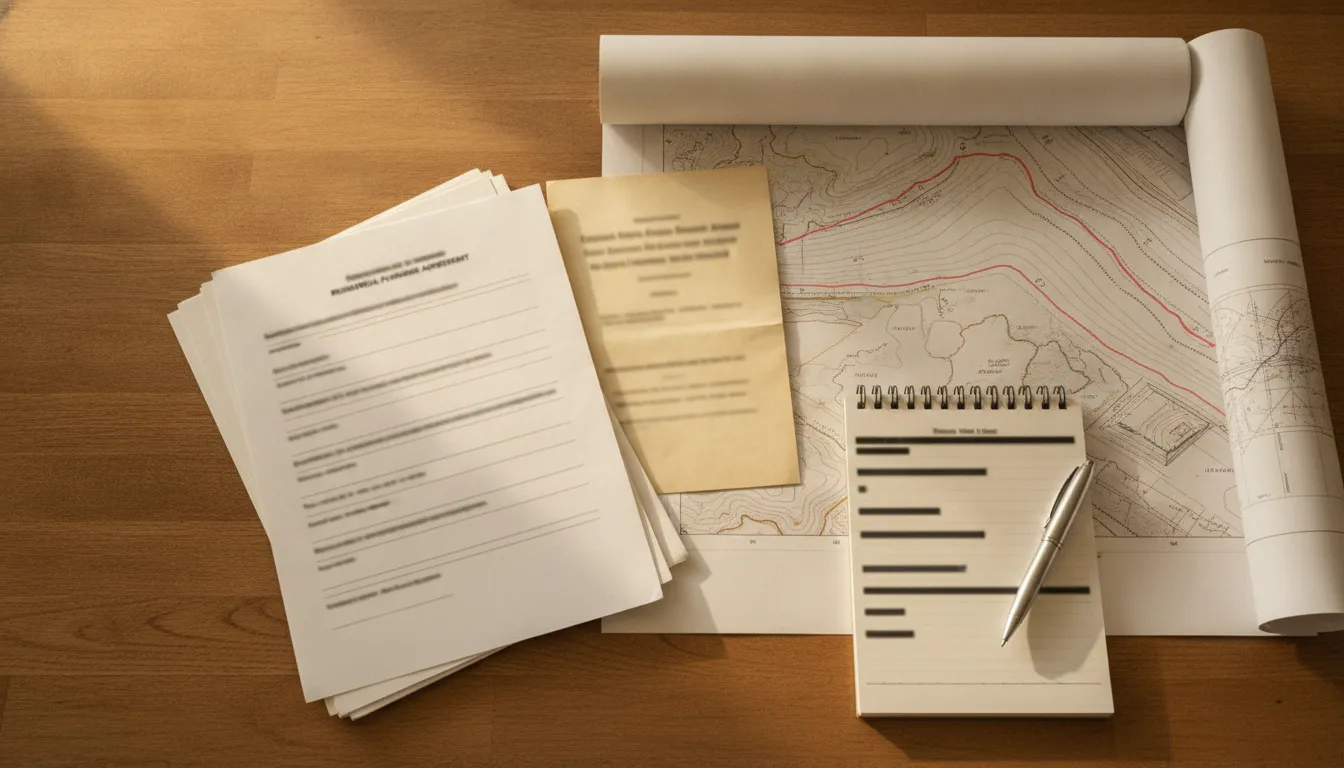
A missed repair credit, a fence that sits on the wrong line, or a buyer who says a leak was never disclosed can stall a sale or sour a long ownership. A real estate litigation lawyer California owners, buyers, sellers, and investors talk with can sort those facts from the court process. This guide covers common disputes, early steps, and how negotiation, mediation, and a lawsuit differ. It is general information, not advice about your matter.
The firm's public site is not live yet, so there is no online intake page to open. Use the questions in this real estate litigation lawyer California guide to prepare for a conversation once a verified contact path is available.
Most disagreements start in a contract, a disclosure, or a fight over who may use a piece of land. The label on the argument matters less than the papers behind it. A purchase agreement, a lease, a deed, and a survey can each point to a different duty.
Residential sales often turn on what the seller said, and what the agents saw. Civil Code section 1102 applies the transfer-disclosure article to several kinds of transfers of a single-family home, with listed exceptions. Covered transfers include a sale, an exchange, a sales contract, an option, and a ground lease coupled with improvements. A waiver of those duties is void as against public policy.
Civil Code section 2079 adds a separate broker duty. A broker who has a written contract to find a buyer of a one-to-four unit home must make a reasonably competent visual inspection. The broker must also disclose material facts that the inspection would reveal. A cooperating broker who is working with that listing broker to find a buyer has the same duty.
Those two statutes do not decide who wins a particular claim. They do show why a "they never told me" argument needs the disclosure form, the inspection report, and the broker's role, not a general sense that something felt unfair.
Commercial leases and development deals raise many of the same document questions. They often sit outside the one-to-four unit disclosure rules above. Read the lease or construction contract before assuming a residential statute applies.
A boundary fight is a useful contrast. The question is usually not what a form failed to say. It is where the deed, the survey, and long use put the line. An easement for a shared driveway can look like a boundary fight and still turn on a recorded grant instead. Put the deed, any easement, and a current survey in one stack before you argue about a fence.
You do not need a lawsuit, or a lawyer, for every tense email. A conversation is worth having when the stakes, the deadline, or the paperwork outgrow a back-and-forth between the parties.
Talk with a lawyer before you answer a formal demand, a notice of default, or a letter that sets a short cure period. Do the same when a clause is unclear and money or possession turns on the wording. A recorded lis pendens is another reason to call before you write back. So is a neighbor who has started building on land you believe is yours.
Co-owners should get advice before one of them lists the property or stops paying the mortgage. California's partition statutes let specified owners ask a court to divide concurrently owned property or to sell it. Code of Civil Procedure section 872.210 states who may commence that action. It is not a do-it-yourself form. Spouses and putative spouses have a separate limit in that same section for community and quasi-community property.
Investors in a small LLC or tenancy in common should also look at the operating agreement before they assume a partition case is available. A buyout clause, a right of first refusal, or a required vote can change the path even when title is shared.
Bring a short timeline, the signed agreements, and the latest written demand. Ask which deadlines apply, which papers are still missing, and whether the next step is a letter, a mediation, or a filing. An initial conversation does not by itself create an attorney-client relationship, and a lawyer may decline the matter.
Deadlines are the main reason to get advice early. Missing one can end a claim even when the underlying story is strong. The periods below are starting points from the code, not a calculation for your dates.
| Dispute type | California starting point | What to verify |
|---|---|---|
| Written contract, note, or other written obligation | CCP section 337 sets four years for a written contract, with stated exceptions. | When the breach happened, and whether another clause controls. |
| Injury to real property, including many trespass claims | CCP section 338(b) sets three years for trespass or injury to real property. | When the injury occurred, and whether it is continuing. |
| Recovery of real property or possession | CCP section 318 looks back five years at who possessed the property. | Who was in possession, and for how long. |
A contract can also set a notice period that is shorter than any of these statutes. A fence notice is a clear example. Civil Code section 841 presumes adjoining owners share an equal benefit from a dividing fence. Unless they agree otherwise in writing, they are also presumed to share reasonable build, maintenance, or replacement costs.
The owner who plans to incur those costs must give 30 days' prior written notice. That notice has to describe the problem, the proposed fix, the estimate, the cost split, and the timeline. A court can order a different split when equal sharing would be unjust. The statute lists hardship, a cost that exceeds the value the fence adds, and a project driven by one owner's taste.
Do not treat this table as a filing calendar. Tolling, accrual, a written waiver, and the type of relief you want can all change the date. A lawyer should read the instrument before anyone picks a deadline.
Early organization will not win a case. It does keep you from losing facts. Use this order, and stop if a lawyer tells you a step would hurt the matter.
The California Courts ADR overview explains that most civil disputes resolve without a trial, and that mediation and related processes are usually less formal than one. That page is public court information, not a review of your contract.
People often use "litigation" for any argument. In California practice the word usually means a case in court, with filings, deadlines, and a decision-maker. Two quieter paths come first in many property contracts.
The parties, sometimes through counsel, trade documents and proposals. A repair credit, a price reduction, a fence cost split, or a move-out date can all be settled this way. A written amendment should say what is resolved and what is not. An oral side deal is easy to misremember.
A neutral mediator helps the parties look for terms. The mediator does not decide the case. The Judicial Council describes mediation as a way to resolve a dispute without a trial, and it is often less expensive and less time-consuming than one. Some contracts require mediation before a lawsuit. Read that clause before you refuse to attend.
A lawsuit asks a court for relief. That relief might be money, possession, a boundary decision, or an order dividing co-owned property. The case brings formal deadlines, discovery, and hearings. It also costs time and money, and no result is promised. Filing is a choice to make after the contract's pre-suit steps, not a substitute for them.
Ask three practical questions before anyone drafts a complaint. Has every contract notice already gone out the way the clause requires? Is the relief you want something a court can order, or is it a price credit the other side can still pay? And can you prove the facts with documents you already have, or only with testimony you hope to get later?
Arbitration is a fourth path some deeds of trust and leases require. A private arbitrator, not a judge, hears the case under the clause the parties signed. Confirm whether your agreement has one before you assume a courthouse is the next stop.
A useful first meeting is concrete. The lawyer reads the agreement, maps the deadlines, and tells you which facts are still missing. You should leave with a short list. That list should name documents to gather, whether to send a notice, and whether settlement talks are still realistic.
Bring questions a general web search will not answer. Which statute or contract clause sets the next date? Would a mediation clause block a filing? Does the other side's letter admit a fact you should not ignore? A good read of one contract is more useful than a stack of generic checklists.
Ellis Group Law is a California firm with a Los Angeles office. Its business and real estate work includes commercial and residential transactions and ongoing counsel for owners and investors. Personal injury matters are separate and are handled on contingency, with no attorney fee unless there is a recovery. The firm has not published hourly rates, case results, or a public intake page.
Ask, in the meeting, what the scope of work would be and how fees would be billed. Do not treat this California real estate litigation overview as a promise that the firm can take the case.
No. Many repair credits and scheduling problems settle in writing between the parties. Get advice when a deadline is close, a demand letter arrives, title or possession is at stake, or the contract language is unclear.
No. Section 1102 covers specified transfers of single-family residential property, and section 1102.2 lists exceptions. Multi-unit and many commercial deals follow the contract and other law. A waiver of the article's requirements is void.
Civil Code section 841 starts from an equal-share presumption for a dividing fence, after 30 days' written notice. A court can order a different split if equal sharing would be unjust. A written owner agreement can also set another split.
It is a lawsuit to divide or sell property owned by more than one person. Code of Civil Procedure section 872.210 lists who may file. It is not available for every co-owner fight, and married couples face a separate limit.
No. Many engagements stop at a document review, a notice, or a mediated deal. Litigation is one option after those steps, not the default.
When a verified contact page is published, use it to ask for a document review. Until then, keep your timeline, contracts, and photos together and reread the deadline table in this guide to hiring a real estate litigation lawyer in California.
Property disputes turn on documents and dates. Preserving both, and checking the notice clause, is the practical first move. This article is general information about California law, not legal advice, and reading it does not create an attorney-client relationship.
Gather assets, people, and documents before you meet an estate planning attorney California families use. A first-meeting checklist.
Learn how contingency fees work in California injury cases, what fees and expenses mean, and which questions to ask before signing an agreement.

Learn how Los Angeles companies can prepare for formation, hiring, contracts, fundraising and expansion, and when to seek business-law guidance.
An article can only speak in general terms. Call Adrian, or send a message with a good way to reach you, and he'll talk it through with you.
Before you write, read the legal notices on how messages to the office are handled.
Adrian A. Ellis, LLC uses cookies for analytics to improve this site. See our cookie policy.